Building software that respects Nepali context
Names, calendars, fonts, and the small details of how people actually work are not decoration. They are the system.
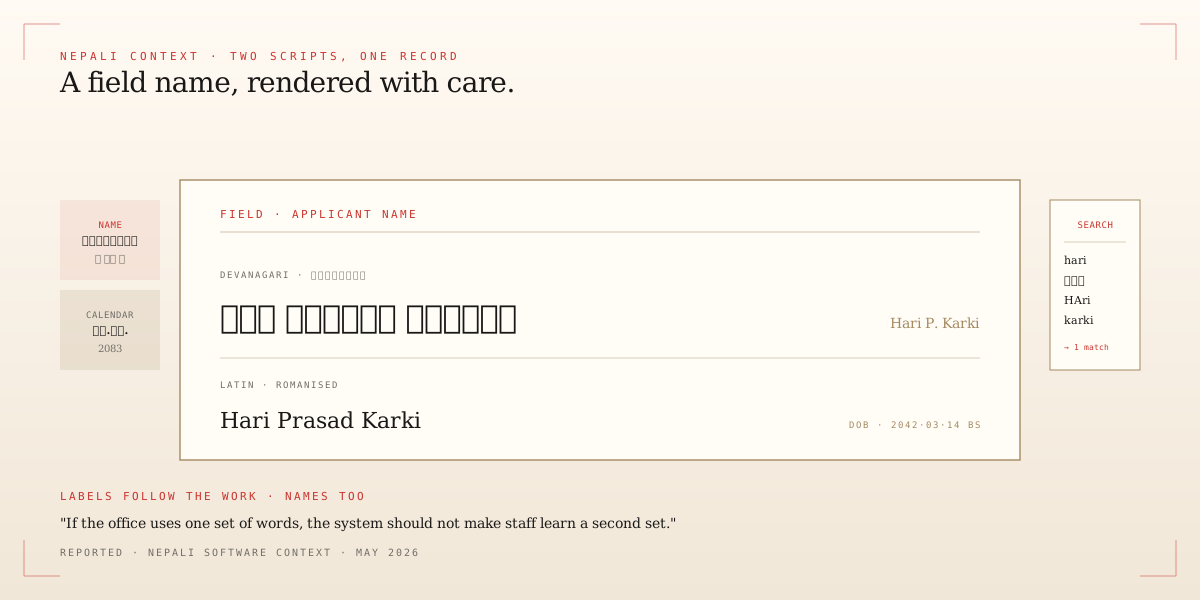
A bilingual form that switches between English and Nepali is a start, but it is not the finish. There is a difference between a system that supports Nepali input and a system that respects how Nepali institutions actually work.
Fiscal years here do not always align with the calendar on the screen. Office hours start when they start. A register that the field office keeps in Devanagari needs to read correctly when the province office opens it in English. These details are not edge cases. They are the product.
When a system honours these details, the people using it stop translating between their job and the software. That is when the work gets faster, the records get cleaner, and the people who maintain the system can actually explain it to the next person.