Small teams in Nepal ship large systems
The teams behind the systems most public institutions actually rely on are not large. They are tight, careful, and deeply accountable.
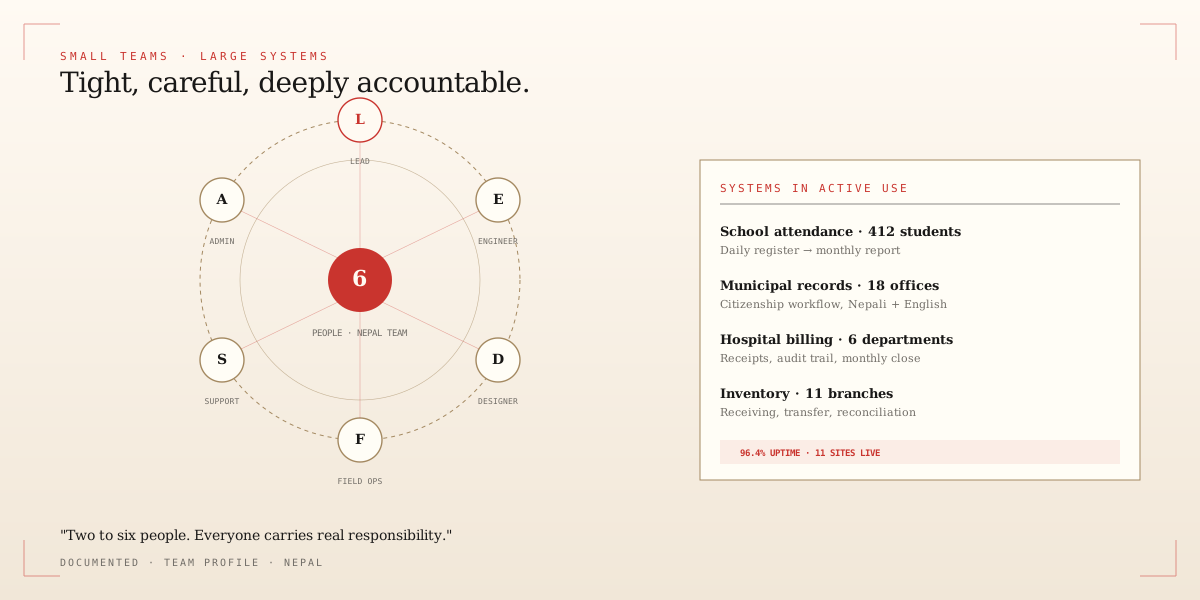
I have worked with schools, municipalities, businesses, and small organizations across Nepal. The pattern is consistent. The team is two to six people, everyone carries real responsibility, and the system has to keep working long after the launch call.
What helps is treating deployment as one milestone, not the finish line. Logs that anyone on the team can read. Backup jobs that run without being asked. A short, written playbook for the three most common things that will go wrong. None of that is glamorous. All of it is the difference between a system that quietly keeps serving and a system that quietly stops.
The good news is that small teams can absolutely run serious infrastructure. The discipline is the same as anywhere — small, predictable changes, tested before they ship, and a habit of reading what actually happened last week.