The quiet discipline behind a growing software practice
Technical study matters, but dependable delivery comes from quieter habits: listening closely, naming things clearly, and staying with the work after it ships.
Software work rewards the visible parts. A new screen is easy to show. A finished website makes a good image. A launch gives a project a date that everyone can point to. The habits that keep the work trustworthy are quieter, and they take longer to notice.
I learned the technical foundations through systems engineering study and through projects that forced the concepts to become real. A diagram is useful until a person has to enter the record. A model is useful until two teams use the same word for different things. A deployment is useful until the first person needs help after the project team has left the call.
The first habit is listening before naming the solution. I ask people to describe the work in their own words. The vocabulary matters because it becomes the vocabulary of the system. When a product invents names that the team does not use, every screen adds a small translation task. Those tasks accumulate. Clear labels remove them.
The second habit is keeping decisions visible. A system grows through small choices about records, roles, dates, approvals, and ownership. I want those choices to be easy to explain. If only one person knows why a field exists or why a permission works a certain way, the system depends on memory. A short note can protect a decision better than a complicated abstraction.
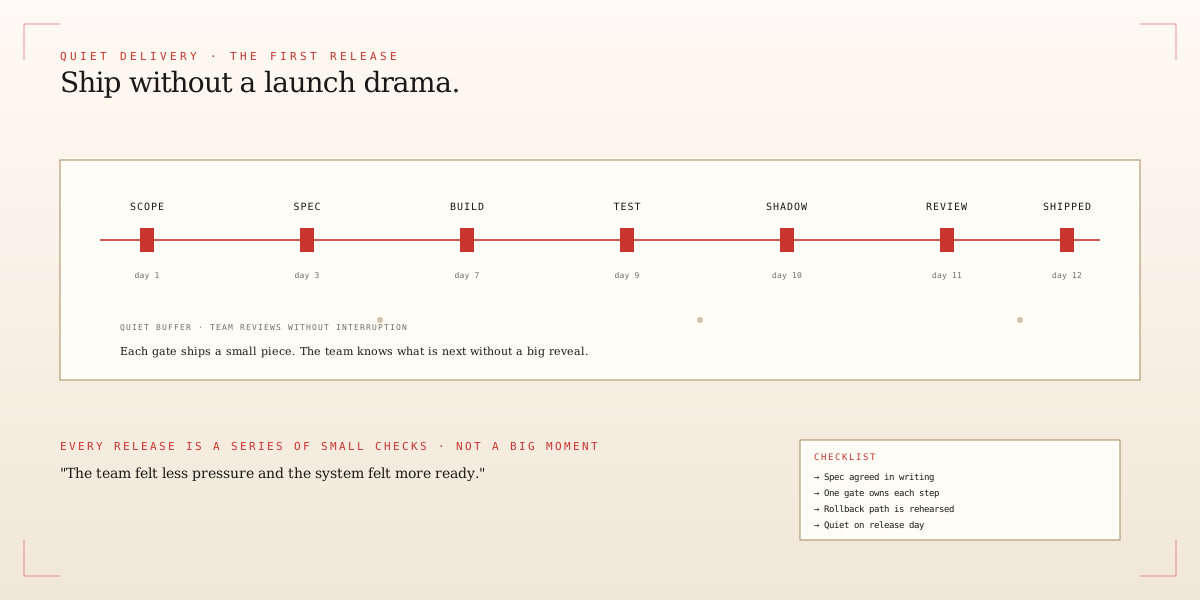
The third habit is making the next change small enough to understand. A large rewrite can feel clean at the beginning, but it makes it harder to see which change created a new problem. Small releases give the team a chance to check the result against the work. They also give users a clear moment to say what still feels wrong.
The fourth habit is staying close to the routine after delivery. I want to know which screen people avoid, which report they export, and which question appears in support messages. That information tells me more than a launch-day reaction. It shows where the system has become part of the job and where it has not.
The fifth habit is leaving the work readable. Another developer should be able to follow the data, understand the roles, and find the place where a change belongs. The organization should be able to find its documents, manage its access, and ask for help without opening a mystery. Readability is a delivery feature.
These habits do not produce the loudest portfolio. They produce software that people can carry forward. That is the standard I want for my practice as I continue building with organizations in Nepal and beyond.
The next project usually begins with a problem that sounds ordinary: a record is hard to find, a report takes too long, or a team repeats the same call every day. Those problems deserve careful work. If you can describe yours, I can help you decide whether software is the right next step.