The work after the launch
A system proves itself after the launch call, when records, backups, ownership, and an ordinary Tuesday all have to keep moving.
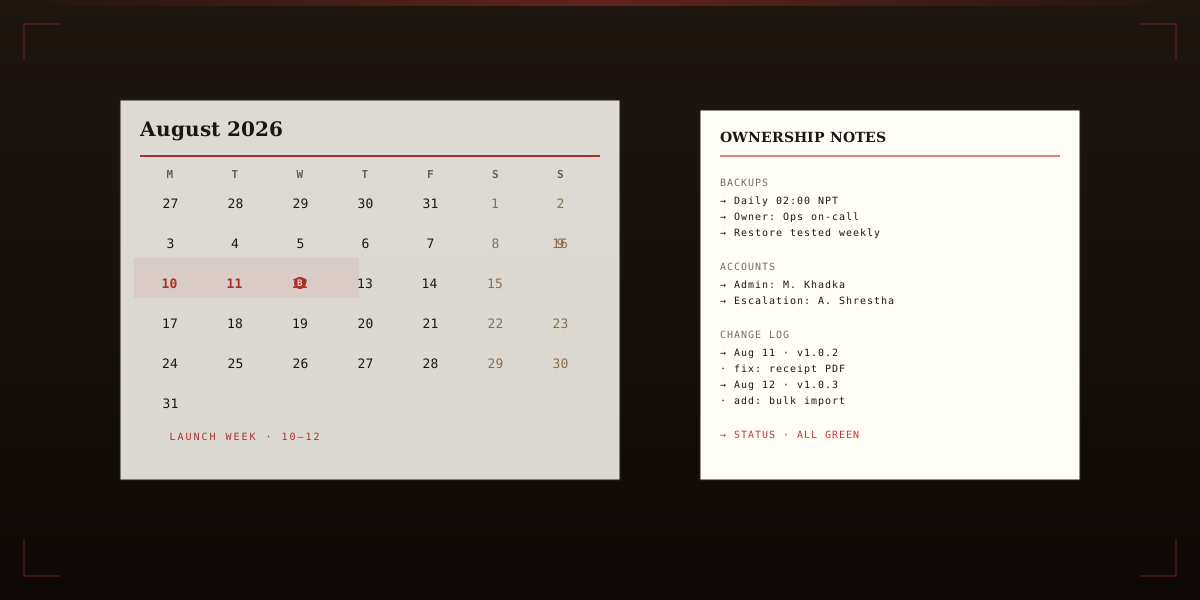
A launch is easy to recognize. There is a final meeting, a list of links, a few screenshots, and a message that says the system is live. The harder moment arrives a week later, when the person who knows the most is away and someone else needs to complete the work without asking for a tour of the code.
That moment shapes how I think about delivery. A system is not finished when the interface looks complete. It is ready when the people responsible for it can understand the next step, recover from a mistake, and find the record they need. The work after launch deserves the same attention as the work before it.
I start with ownership. Someone should know who checks the backups, who can create an account, who reviews a failed job, and who decides whether a change is safe to release. The answer does not need to be a large operations department. It needs to be written down and easy to find. When ownership stays inside one person’s memory, the system carries a risk that no interface can hide.
I also want logs that a person can read. A log entry should answer three questions: what happened, when did it happen, and what should someone do next? Technical detail has a place, but a team needs a useful signal before it needs a stack trace. A failed import, a rejected approval, or a payment that did not settle should leave enough information for the responsible person to begin an investigation.
Backups follow the same rule. A backup that exists only in a plan does not help anyone. The job needs to run, the team needs to know whether it succeeded, and someone needs to test a restore. The restore is the important part. It shows whether the organization can recover the records it considers important, not only whether a file appeared in a storage bucket.
The support path should stay short. When a user gets stuck, they should know whether to check a label, retry an upload, contact an administrator, or report a system problem. A short playbook for the three issues that happen most often can save more time than a long manual that nobody opens. I prefer instructions that describe the actual screen and the actual decision in front of the person.
Small changes also need a home. A team should be able to record what changed, why it changed, and who checked it. This habit protects the system from silent drift. It also makes future work easier because the next person can see which decisions already exist. A clear change record turns maintenance into a conversation instead of a guess.
The best feedback often arrives after people use the system at full speed. A form that felt fine during a demonstration may be slow when ten staff members submit records at once. A report that looked complete may leave out the one field a manager needs every Friday. I want that feedback early, and I want the team to feel comfortable pointing at the part that still gets in their way.
The work after launch has no dramatic finish line. It is a series of small checks that keep records accurate and people confident. That is the part I care about most because it is where software becomes part of a routine.
If your system works in a demo but creates questions in daily use, that is a useful place to start a conversation. The next improvement usually sits close to the work.