Why Aasha Tech focuses on useful systems
The strongest software work starts with the records, decisions, and handoffs an organization has to get right every day.
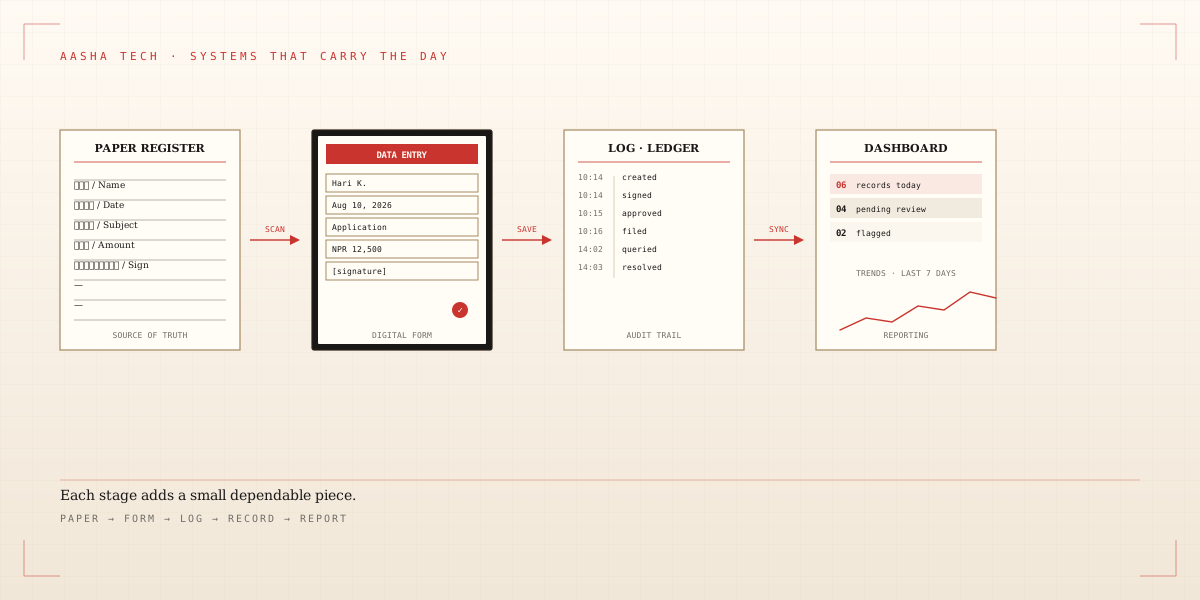
Aasha Tech Pvt. Ltd. is the company I lead as Managing Director and Founder. The name matters less than the kind of work it represents. I started the company around a practical question: where does an organization lose time because its records, decisions, and handoffs live in too many places?
The answer is different for every team. A school may need one clear place for student records and communication. A municipality may need a dependable path for applications, certificates, dispatch, and audit history. A business may need its sales, inventory, invoices, and reports to agree with each other. The technology changes with the problem. The standard stays the same: the system has to help the organization make the next correct decision.
That is why I prefer the word useful. Useful software does not ask people to admire it. It gives them a record they can find, a form they can finish, and a report they can understand. It reduces the number of times someone has to copy the same information or call another person to confirm what the system should already know.
The first phase of a project is a conversation about work. I want to know who receives the request, who checks it, who approves it, and what happens when the request is incomplete. I ask which reports matter at the end of the week and which records people still keep outside the system. These questions expose the actual shape of the organization.
From there, I build around the core workflow. A digital records platform needs reliable identity, permissions, search, and a history of changes. An agriculture survey system needs a clean path from field collection to analysis and reporting. A billing platform needs invoices, payments, customer records, and financial views that agree. An inventory system needs stock movement to match what happens at the counter. The details are practical because the work is practical.
The handoff matters as much as the build. A system should leave the organization with clear access, understandable screens, and a support path that does not depend on one person being available at all times. Training should follow the workflow. Documentation should answer the questions that actually come up. The team should know what to do when a record is wrong, an import fails, or a new staff member joins.
The public side of a company matters too. A website should explain what the organization does, show the work without exaggeration, and make the next conversation easy. That is part of the same system thinking. A visitor should not have to translate a vague promise into a service they can use.
I keep Aasha Tech focused on this layer because it is where software becomes accountable. A new feature can look good in a presentation. A correct record, a shorter approval path, and a report that arrives on time show up in the working day.
If your organization has a workflow that depends on repeated calls, duplicated records, or a spreadsheet that nobody else can safely edit, it may be ready for a clearer system. Start with the workflow. The software comes after.